


A lot of brilliant people struggling with sales calls.
Whether it is the feeling of awkwardness of selling yourself or just not knowing what to do.
It’s not easy or cheap to get leads, so if you struggle with those calls it’s highly likely you’re losing money because you’re not closing deals that should close.
So, I’ve put together a simple framework for you to use on your next call:
The GP Framework
Most anxiety on sales calls comes from the pressure to convert. That pressure makes you do silly things, like talk to much, explain to much and not listen to your prospective clients pains and needs. A good sales call won’t feel awkward, it will feel like an appointment with a Doctor.
A Good Doctor doesn’t come to appointments with an agenda to prescribe a specific treatment, a good doctor will want to understand the issue first.
Doctors are effective because they don’t persuade.
They help people understand their problem clearly, then recommend the obvious next step. Because the logic is clear and the intent is trusted, there’s no resistance. Good sales works the same way.
So, we do all our calls like a Doctor would….
Officially it’s called the Calgary–Cambridge model, which is used widely in consulting of all kinds.
This is what it looks like:
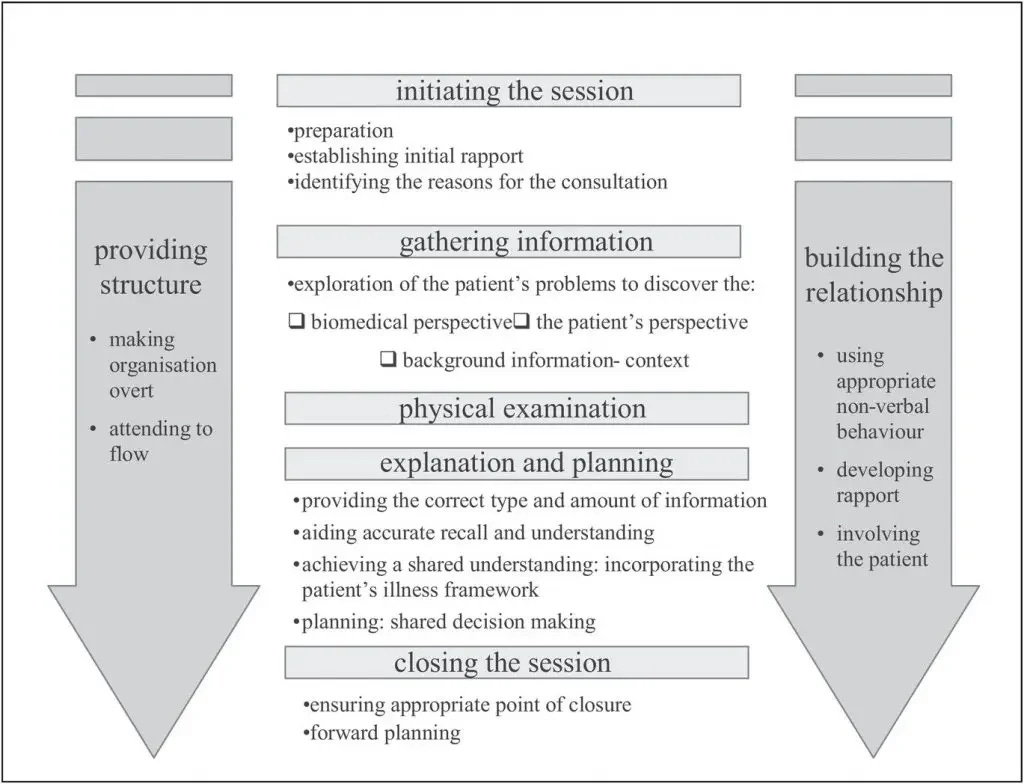
Once the pleasantries are out of the way, this is the exact structure you MUST follow:
Step 1. Opening – identify the problem
What you ask
A single open question. Something like: Can you walk me through what prompted you to have the call with me?
Why this matters
The buyer frames the problem in their own words
You learn what they think is wrong
You avoid solving the wrong thing
What goes wrong if you skip it
You start talking about a problem they don’t recognise
They feel sold to instead of understood
Step 2. Symptoms – understand the shape of the problem
What you are doing
You are collecting facts.
How long it’s been happening?
What they’ve already tried?
What currently isn’t working?
Why this matters
It stops you guessing
It shows whether this is a real issue or a minor annoyance
Patterns start to appear
What goes wrong if you skip it
You recommend the wrong solution
You sound generic
Trust drops because your advice feels detached from reality
Step 3. Impact – confirm the problem is worth solving
What you are checking
Whether the problem has a meaningful cost. How much is it impacting them, their goals and their day-to-day life.
This can be:
Time
Money
Energy
Emotions
Missed opportunities
Why this matters
Not all problems deserve action
People only change when the cost of staying the same is higher than the cost of change.
What goes wrong if you skip it
The call ends with “I’ll think about it”
There is no urgency
You mistake interest for intent
Step 4. Diagnosis – prove you understand the problem
What you do
You summarise their situation back to them.
Not word for word. But an overview of their position.
Why this matters
This is the moment trust is earned
People buy from those who understand their problem better than they do
What goes wrong if you skip it
Your solution feels random
The buyer can’t see the connection
You sound like every other seller
Step 5. Recommendation – introduce the solution
What you do
You explain:
What you recommend
Why this approach fits their situation
Why this matters
The solution now feels logical, not pushy
The buyer can connect the dots themselves
What goes wrong if you skip earlier steps
This feels like a pitch
Objections increase
Price resistance shows up early
Step 6. Agreement – decide what happens next
What you are doing
Checking alignment, not applying pressure.
Why this matters
A “no” here saves everyone time
A “yes” is cleaner and more confident
What goes wrong if you skip it
You chase
You follow up endlessly
You mistake politeness for interest
The simplest way to remember this
Each step answers a question:
What is the problem?
How does it show up?
Does it matter enough?
Do I understand it correctly?
Is there a sensible solution?
Do we move forward or not?
Doctors follow this order for a reason.
Sales works the same way.
If you liked this or found helpful, please do two things for me
Subscribe for more content like this
Reshare it on your socials, so others can benefit.
Thanks and Happy New Year!