


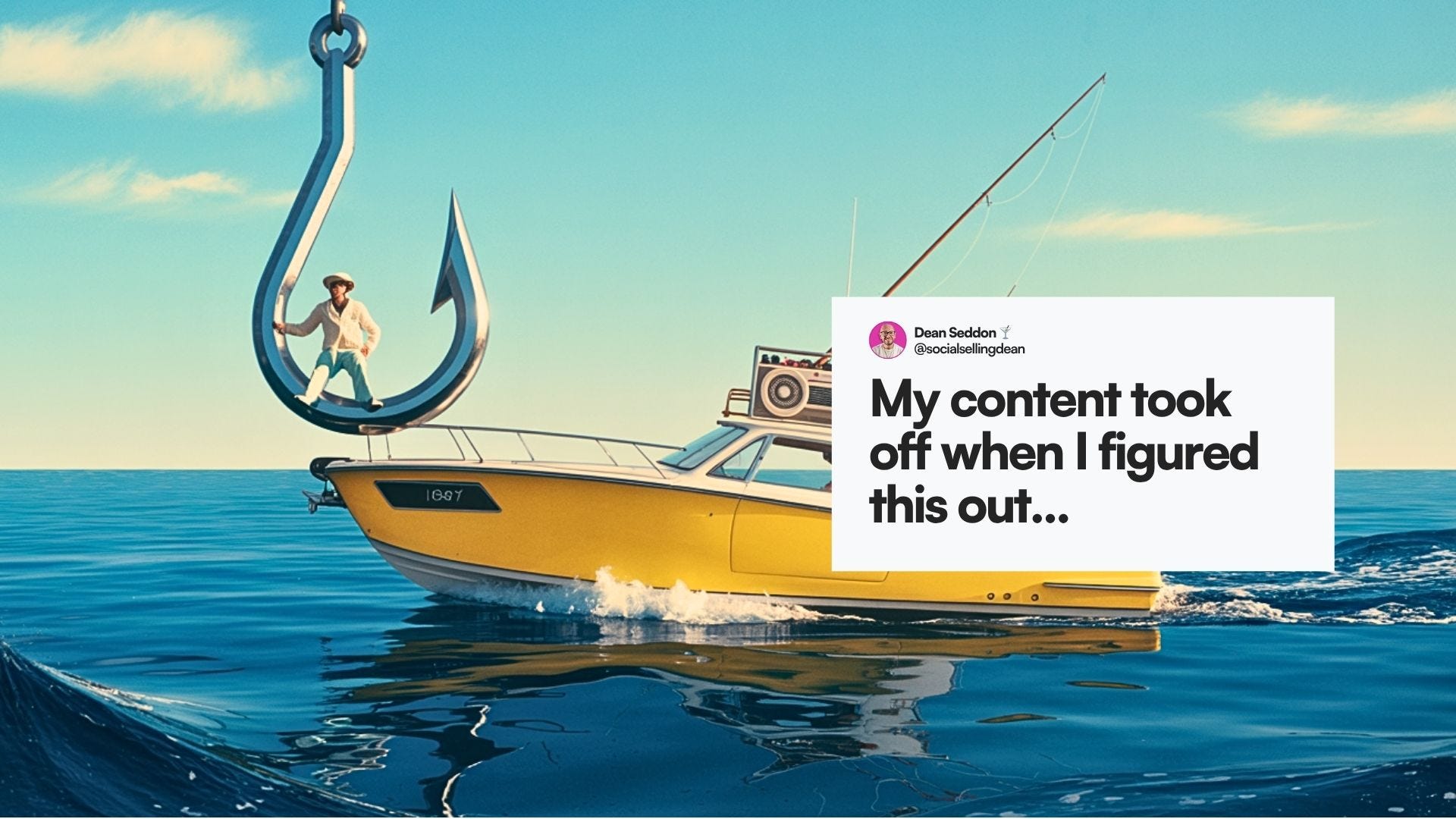
One of the biggest improvements you can make to your content is improving the first few lines of copy.
I’d struggled for years with this.
I’d spend spend hours creating posts, videos and graphics, but the hook is often the thing that decides whether anybody consumes the content in the first place.
I’d missed the importance of it.
I’d assuming it was a gimmick.
I had useful advice, strong ideas and valuable experience, but people still needed a reason to pay attention. I’d get angry at my well-thought out posts bombing and then some random post going crazy.
That’s the power of a good hook.
The easiest way to understand hooks is to think about newspapers. A newspaper had a front cover designed to grab attention.
There’s a headline, an image and a smaller teaser section hinting at the main story inside.
The teaser is the hook.

Social media works exactly the same way.
The image or video usually gets attention first. The hook is the second thing people look at. If the hook creates curiosity, they continue reading. If it doesn’t, they move on.
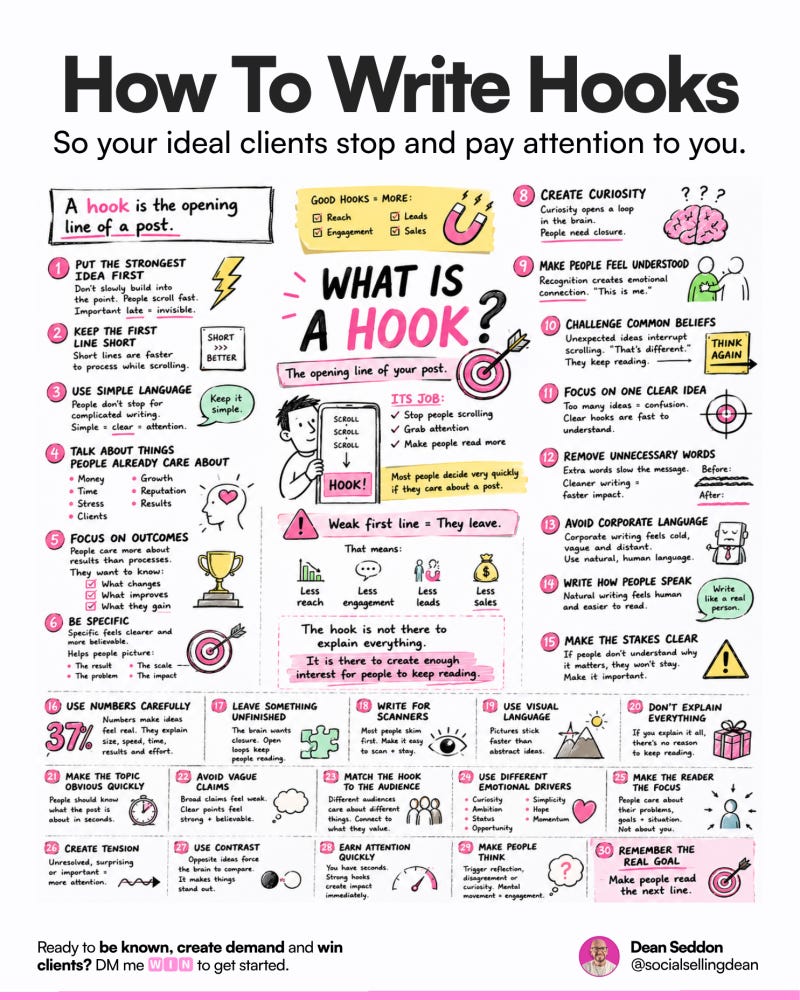
A lot of people think the hook is there to explain the post, but that’s not really its job. The hook is there to create enough interest for somebody to continue into the rest of the content.
The Power Of Open Loops
Hooks are more than a social media gimmick.
They are part of how you get investment of time from people. Hooks are used in marketing, television, investor decks, presentations - they are fundamental human communication.
The best hooks create what’s called an open loop.
An open loop is an unfinished idea that leaves people with a question in their mind. It creates curiosity and makes people want to know more.
TV shows do this constantly with cliff-hangers. Something happens and you immediately want to know what comes next. Hooks work the same way.
You give people enough information to become interested, but not enough to fully satisfy that curiosity.
For example:
9 tips to send better DMs
No 9. is key to more responses
That creates an unanswered question. People now want to know what number 9 is. That curiosity pulls them into the rest of the post.
Hooks need to be short, easy to read and leave people asking a what, why or how question.
I alternate between two-line hooks (with a space between) and three short lines (see examples below).
Once you understand this, writing hooks becomes much easier because you stop trying to explain everything immediately. Instead, you focus on creating a reason for people to continue reading.
General Hooks vs Specific Hooks
There are two main types of hooks: general hooks and specific hooks. Both work, but they achieve different things.
General Hooks
General hooks attract a broader audience. These are usually built around curiosity, emotion, surprise or drama.
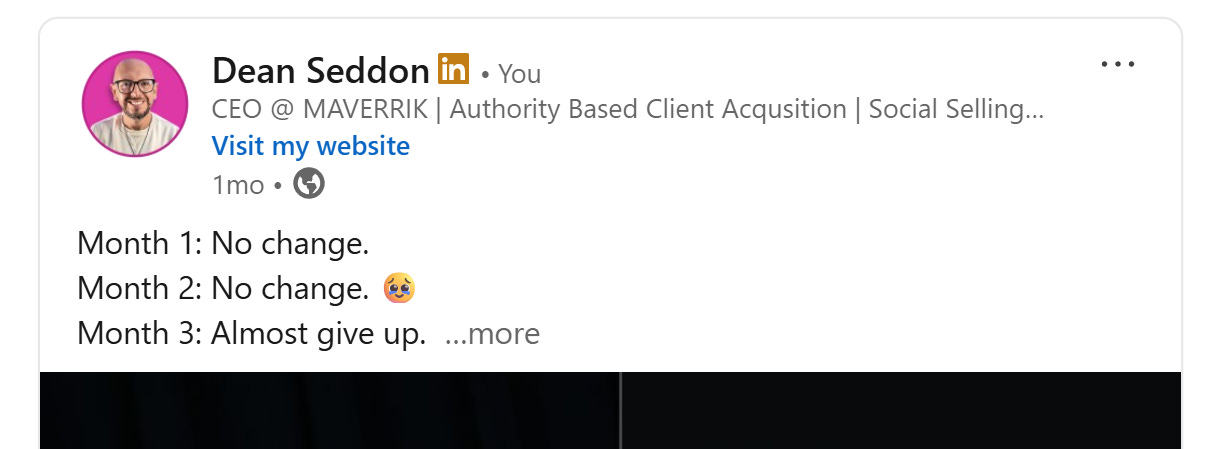
General hooks are useful when your goal is:
Reach
Awareness
Broader engagement
Because they appeal to a wider audience, they can help your content spread further.
Specific Hooks
Specific hooks are designed to attract the exact audience you want.
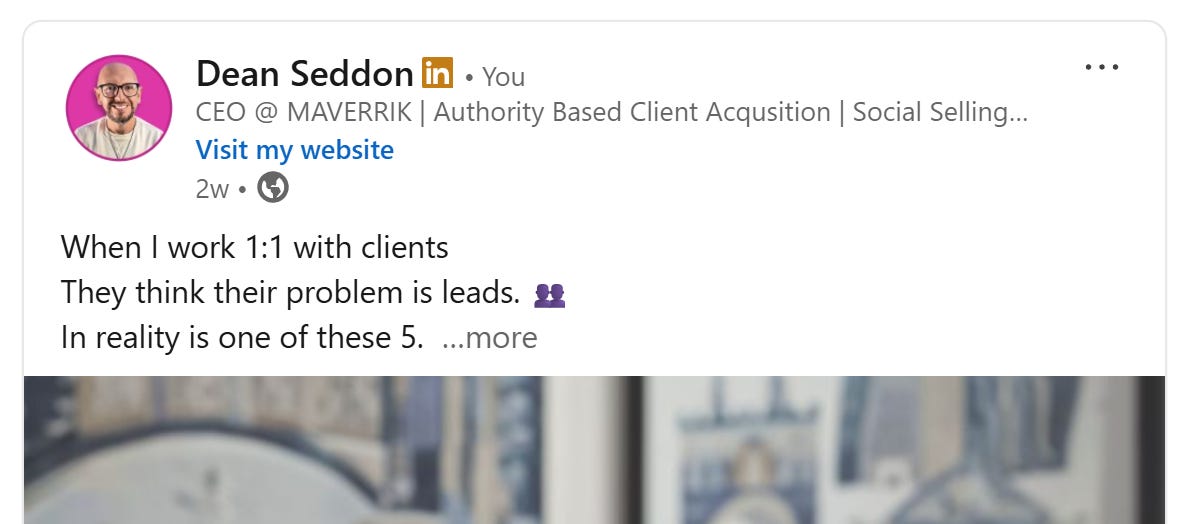
These hooks usually reference:
A problem
A desire
A result
A type of person
For example, if your audience wants more leads, your hook should connect to leads. If your audience wants more sales, your hook should connect to sales.
The strongest hooks usually reference both the audience and what they want. That’s what makes people stop scrolling because they instantly feel the post is relevant to them.
What People Pay Attention To
Once you start thinking about hooks through the lens of audience motivations, the process becomes much simpler. You stop trying to sound clever and start focusing on what people already care about.
The clearer the desire, the easier it becomes to write stronger hooks.
Practical Ways To Improve Your Hooks
Strong hooks are usually simple, clear and direct. They don’t try to say everything at once.
A few small improvements can make a big difference:
Lead with the strongest idea: Put the most interesting point first instead of slowly building into it.
Keep the opening easy to process: People scroll quickly, so clarity matters.
Focus on one clear point: Strong hooks are usually built around one core idea.
Connect to real desires: Talk about things your audience already wants, cares about or struggles with.
Create an unanswered question: Give people a reason to continue reading.
Be specific: Specific hooks feel clearer, more believable and more relevant.
What Happens When Your Hooks Improve
The hook often determines what happens next in the entire content cycle.
When more people read your post, more people engage with it. More comments, shares and profile visits happen naturally because more people are actually consuming the content.
That increased attention can lead to:
More inbound leads
More conversations
More opportunities
More followers
More visibility
The hook is often the first domino that creates all of those outcomes.
That’s why spending more time improving your opening lines is one of the highest-value improvements you can make to your content.
Small changes to hooks can completely change how many people consume the ideas you’re sharing.