


LinkedIn’s algorithm has drastically changed over the last year.
I’ve seen so many people posting about the fall in impressions, engagement and some complaining that they see the same people over and over.

Have you noticed how some people have just vanished from the feed?
Well, LinkedIn’s algorithm is ruthless.
So, this week, I’ve collated some ways you can adapt to the algorithm changes so, you can get a better return for your investment in posting.
Profile And Message Alignment
The algorithm is way more sophisticated now. They can spot people who have deep expertise vs those just jumping on topics for attention.
our profile is one of the ways the algorithm is working out what you are knowledgeable about.
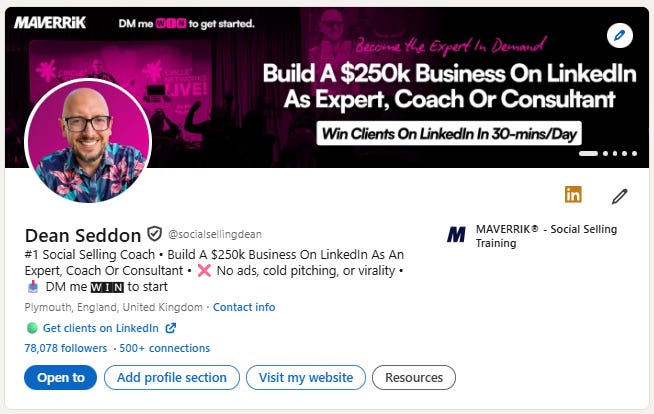
This means you can’t easily show the platform you have deep expertise in a vast number of topics.
You need to focus on one major topic and 3-5 subsets, so you can go deep on your expertise.
The algorithm see’s the alignment of your profile and content. If it’s aligned, you’ll get more relevant attention. If it’s not aligned, you’ll get lost in the feed.
Remember - as clever as algorithms are... AI doesn’t do nuance well. So if you are filling your profile with fluffy words, like unstuck, presence and other nothing words, you are asking for AI to interpret your expertise.
Be specific.
Be clear.
Ensure a 13 year old can get your ideas and message in 10 seconds or less.
If you look at anyone who has risen to prominence, they did so, by becoming an expert in a field. This flip flopping across multiple topics
Visuals Are To Stop The Scroll
People scroll LinkedIn really fast, 1.5 inches per second.
This means your media asset as one primary job. STOP them scrolling past.
Here’s an example...
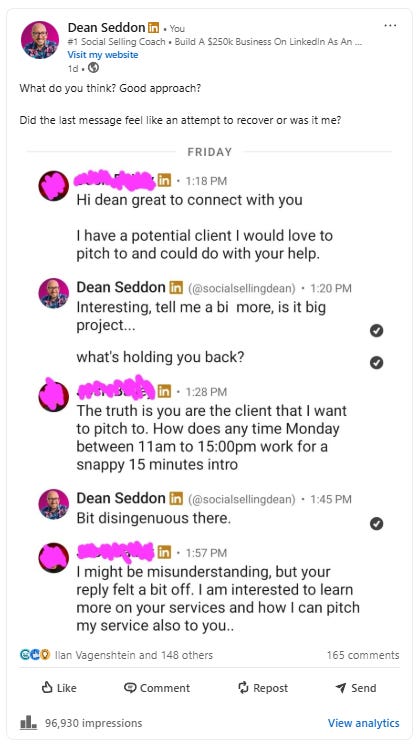
This post yesterday got more than 96k impressions, 165 comments and 148 reactions.
My copy was 3 sentences.
As people scrolled two things happened.
The pink blurring of details created some curiosity.
The screenshot got people interested to see what it was all about.
This visual wasn’t pretty.
I didn’t use Canva.
I just took it on my phone and obscured the person.
The point here is the visual did most of the work.
It got people to stop and pay attention.
Lesson: Your visual “feed appeal” needs to stop people scrolling. That is it’s primary purpose.
Reminder: If it looks like an ad, smells like an ad, reads like an ad... it’s not content....it’s an ad.
Attracting, Nurturing and Converting With Content
It’s nice to have a content schedule, but it’s better to have a content strategy.
This is a simple structure to both grow your visibility, increase and build trust and drive conversion.
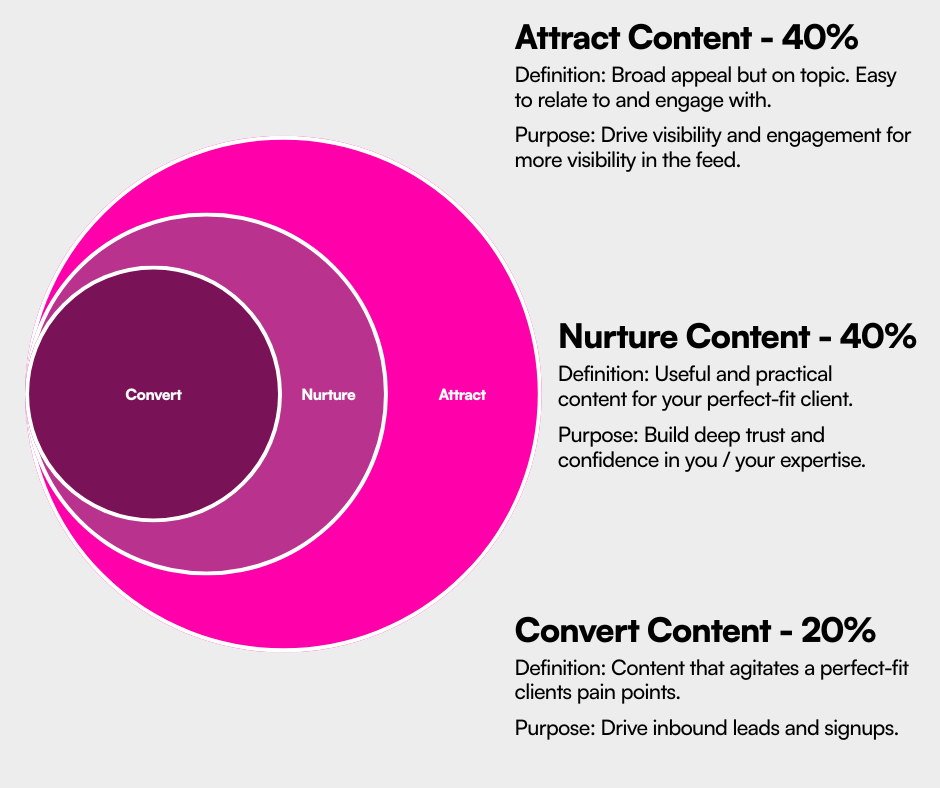
Most people’s content strategy is just “get more engagement”. That’s about satisfying their ego more than improving their bank balance.
Too much attract content = big audience and low conversion.
Too much nurture conversion = deep trust, small audience and low conversion.
Too much convert content = no audience, no trust, no conversion.
It’s about balance.
Quick Takeaways
Align your profile and your message.
Stick to one big topic and 3-5 sub topics.
Optimise visuals for stopping power.
40% of your content should be attract.
40% should be nurturing your ideal clients.
20% should be promotional and driving leads.
Next steps you can take...
Win clients on LinkedIn in 30-mins per day - Check out the Accelerator
My weekly newsletter to grow your business - Check out Signal
Help your friends and followers, share the post.