


LinkedIn has over a billion users. Most of them are invisible.
They post. They comment. They send connection requests. Nothing happens.
Here is why:
The platform is saturated. Everyone is shouting. Nobody is listening. Your content gets lost in a sea of noise. Your profile looks identical to thousands of others offering the same thing.
There is no differentiation. When someone lands on your profile, they need to understand your value in seconds. Attention spans are brutal. If you look like everyone else, you get ignored like everyone else.
There is no trust. People buy from people they know, like and trust. Most LinkedIn activity builds none of these. Random connection requests and generic posts do not create relationships.
The message does not resonate. Too many coaches and consultants speak in vague terms. They talk about “transformation” and “results” without being specific. Vague messaging attracts nobody.
The appeal is too broad. Trying to help everyone means connecting with no one. When you speak to a generic audience, your words land with zero impact.
There is no process. Even when leads appear, most people have no system to nurture them. No way to move someone from stranger to paying client. Opportunities slip through the cracks.
The problem is never LinkedIn itself.
The problem is the approach.
The Fastest Way to Make Money on LinkedIn
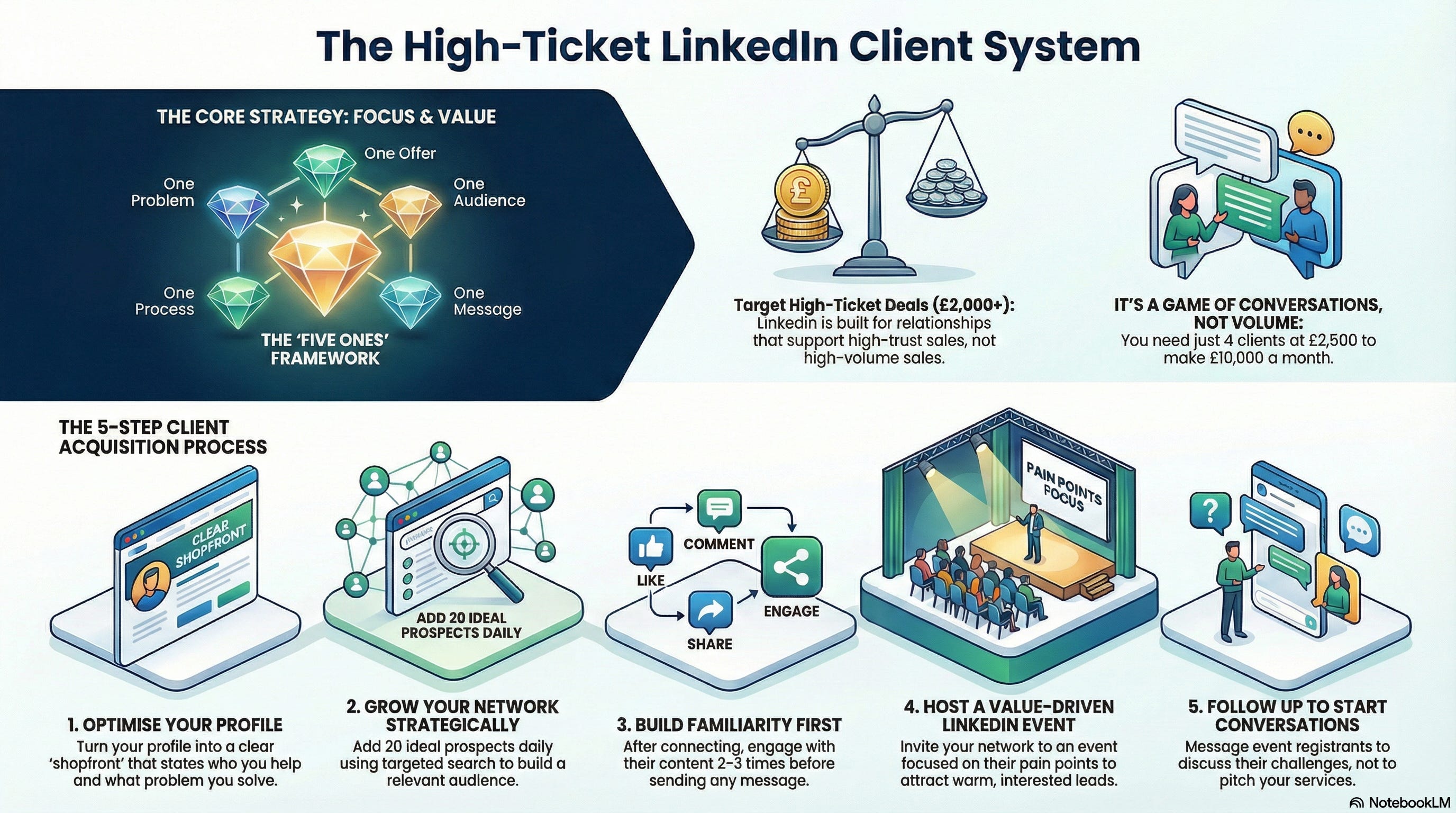
I call it the Five Ones.
This is the foundation everything else builds on. Get this right and everything becomes easier. Get it wrong and nothing else works.
One Problem. Choose a single, specific problem you solve. Not five problems. Not a category of problems. One problem that keeps your ideal client awake at night.
One Offer. Productise your expertise into a clear, packaged solution. People do not buy “consulting”. They buy a defined outcome with a defined process.
One Audience. Pick a specific group of people who experience that problem. Not “business owners”. Not “leaders”. A defined audience you understand deeply.
One Message. Develop a clear, simple message that speaks directly to that audience about that problem. When people hear it, they should think “that is exactly what I need”.
One Process. Build a repeatable system for finding leads and converting them to clients. Something you do week after week that consistently generates opportunities.
Most people spread themselves thin. They chase multiple audiences with multiple offers using multiple messages. They wonder why nothing gains traction.
The Five Ones forces focus.
Focus creates clarity.
Clarity creates results.
5 Ways To Make Money On LinkedIn
What Is Productisation?
Productisation means packaging your expertise into a defined offer with a clear scope, clear deliverables and clear pricing.
Instead of selling “I will help you with marketing”, you sell “I will audit your LinkedIn profile and give you a 30-day action plan to generate leads”.
One is vague and hard to buy. The other is specific and easy to say yes to.
Why Productise Instead of Bespoke?
Bespoke work means every project is different. You scope each one individually. You price each one individually. You deliver each one individually.
This is exhausting. It does not scale. And it makes selling harder because prospects have nothing concrete to evaluate.
Productised offers sell faster because buyers know exactly what they get. They deliver more consistently because you follow a proven process. They scale better because you are not reinventing the wheel every time.
The 5 Models
Here are five ways to package your expertise:
The Audit. You analyse their current situation, identify the gaps and give them a roadmap. “I find the problems and give you the plan.” Example: A LinkedIn profile audit with recommendations, or a sales process review with improvement priorities.
Productised Done-For-You. You build the thing for them using a standardised process. “I create the asset.” Example: Writing their LinkedIn content for a month, or building their lead generation system.
Consulting and Advisory. You guide their decisions so they move faster and avoid mistakes. “I advise so you execute better.” Example: Weekly strategy calls to review their approach and course-correct.
Implementation Support. You work alongside them as they execute, providing hands-on help. “I help you do the work.” Example: Co-working sessions where you guide them through building their system.
Fractional. You take ownership of a function and its results on an ongoing basis. “I own the outcome.” Example: Acting as their fractional head of business development, responsible for pipeline generation.
Pick the model that fits your expertise and your lifestyle.
Each has different time requirements, different pricing potential and different client relationships.
What Makes a Good Productised Offer
A good productised offer answers three questions instantly.
What do I get? The buyer should know the deliverable in one sentence. “A 60-minute audit of your LinkedIn profile with a prioritised action plan.” Not “I help with LinkedIn strategy.”
What does it cost? Fixed price. No “it depends” or “let’s scope it out.” A number they can say yes or no to.
How does it work? The buyer needs to understand the process. How long does it take? What do they need to do? What happens after they pay?
Deliverable. Price. Process.
If your offer is missing any of these, the buyer has to ask questions before they can decide.
Every question is friction.
Every bit of friction reduces the chance they buy.
Make it obvious and you make it easy to say yes.
Why High-Ticket Wins on LinkedIn
Here is something most LinkedIn gurus will not tell you: selling low-ticket offers as your primary revenue source is brutal.
To make $10,000 per month selling a $100 product, you need 100 buyers.
Every single month.
That requires massive reach, constant content and a large audience.
To make $10,000 per month selling a $2,500 service, you need four clients. That is achievable through conversations, not volume.
LinkedIn is built for conversations. It is a relationship platform, not a broadcast platform. The algorithm rewards engagement, not reach. The format favours depth over breadth.
High-ticket services sell through trust. LinkedIn builds trust through repeated contact, valuable content and genuine connection. The platform and the pricing model align perfectly.
Low-ticket has its place. Use it as a “land and expand” strategy. A small purchase opens the door to a bigger engagement. But do not build your business around volume sales on a platform designed for relationships.
The sweet spot for LinkedIn is $2,000 or more per deal. At that level, you need a handful of clients to build a substantial income. That is achievable. That is sustainable.
How To Sell Your Productised Offer
Now for the practical part. Here is exactly how to make money on LinkedIn.
Step 1: Optimise Your Profile
Your profile is your shopfront.
When someone lands on it, they should immediately understand who you help, what problem you solve and why they should care.
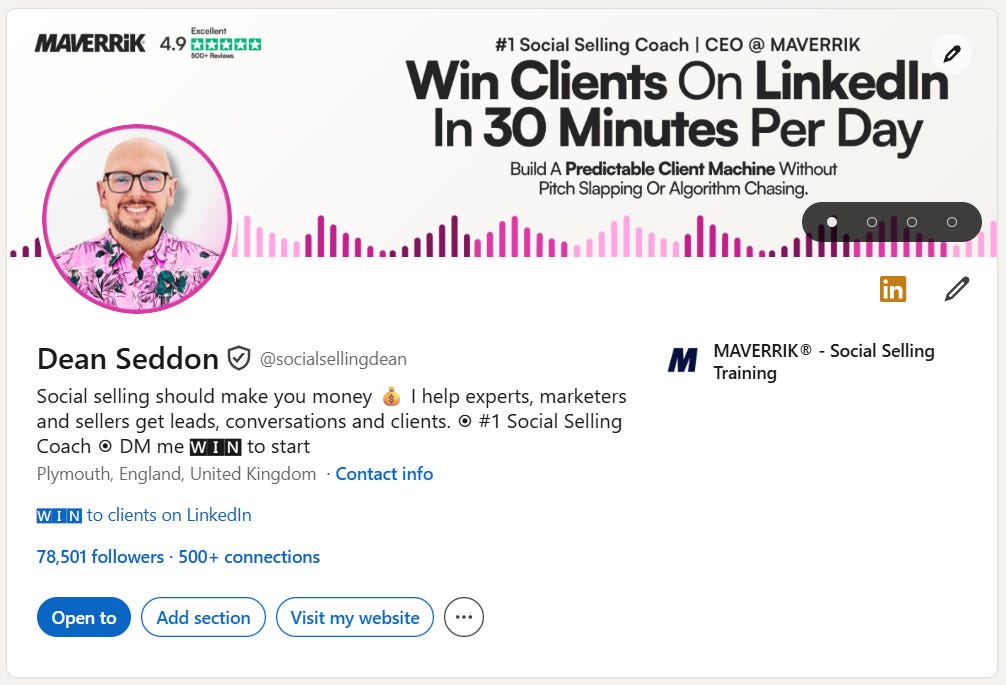
Align everything to your Five Ones:
Your banner should communicate your value proposition visually. Not your logo. Not a generic image. A clear statement of what you do for whom.
Your headline should speak to your audience and their problem. “I help [audience] achieve [outcome]” works better than your job title.
Your Services section should list your productised offers. Make it easy for people to see what they get.
Your Featured section should showcase proof, resources or ways to work with you. This is prime real estate. Use it.
Step 2: Grow Your Network
Your network is your audience. The bigger and more targeted your network, the more opportunities you create.
Use Boolean search or Sales Navigator to find your ideal prospects. Boolean search uses operators like AND, OR and quotation marks to filter LinkedIn’s search results.
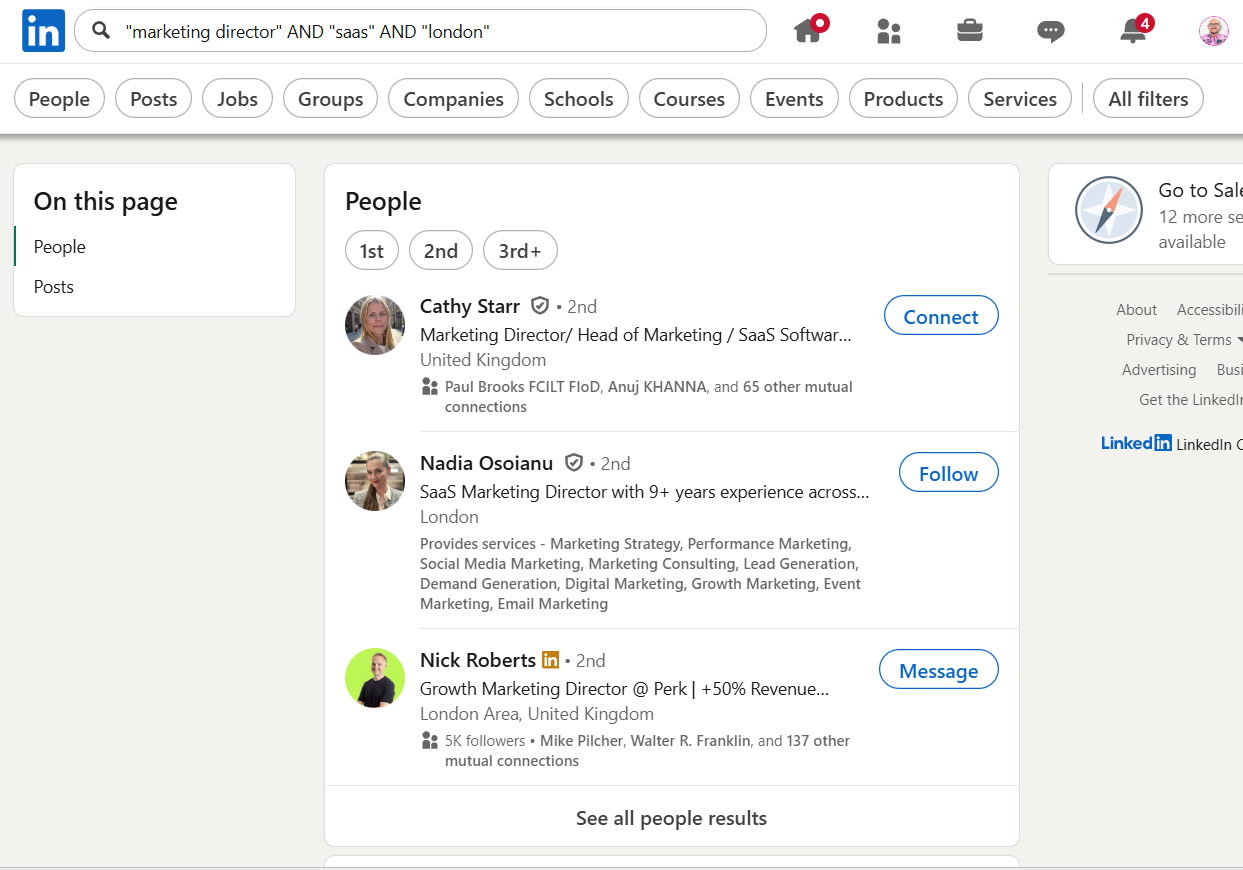
Example: “Marketing Director” AND “SaaS” AND London
This finds people with “Marketing Director” in their profile, in the SaaS industry, based in London.
Add 20 connections every single day. Be consistent. Stick to one audience so your network fills with the exact people you want to reach
Send connection requests without a message. Blank requests have higher acceptance rates than pitchy ones. The message comes after they accept.
Step 3: Send Thank You Notes
When someone accepts your connection, thank them. But do not pitch.

Quirky messages get better replies than boring corporate ones. “Hope you are well” is forgettable. Something unexpected is memorable.
After the thank you, engage with their content two or three times before reaching out again. Comment on their posts. React to their updates. Build familiarity before asking for anything.
This builds trust. It shows you are a real person who pays attention. It makes your next message land differently.
Step 4: Host a LinkedIn Event
This is where the money gets made.
Set up a LinkedIn event with a title focused on an outcome or pain point. Not “Marketing Webinar”. Something like “How to Get 5 Clients Per Month from LinkedIn Without Cold Outreach”.
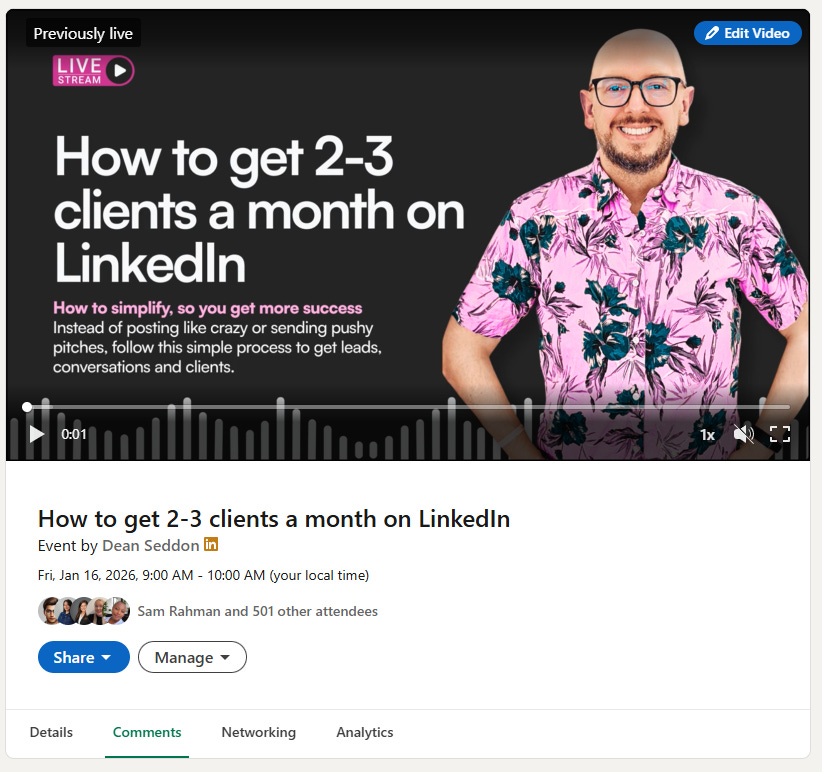
Schedule it three to four weeks out. This gives you time to fill it.
Use the invite feature to invite your connections. LinkedIn lets you invite up to 1,000 people per week. Use that allowance. Every week. Your targeted network means these invites go to the right people.
If your audience and title align with the problems and outcomes your audience wants, you will easily get 150 people signing up. This means 150 people are interested in solving that problem or outcome.
You only need 2-3 clients, so you have more leads than you need.
Deliver a 30 to 45 minute live session. Mix client stories with helpful guidance. Share what works. Be generous with value.
At the end, offer to talk further with anyone who wants that outcome or is struggling with that problem. Share social proof conversationally. Not boring case studies. Real stories about real results.
People on the event have self-selected as interested in your topic. They have given you their time. They are warm.
Step 5: Follow Up
Everyone who registers for your event gets follow-up.
Two or three messages. Not pitching. Offering to talk more.
Your opportunity to make money comes from having conversations about their pains and challenges. Every conversation is a chance to understand their situation and show how you help.
Some will book calls. Some will buy. Some will not be ready now but will remember you later.
That is it. Repeat this process over and over.
This is how I built my business to seven figures. It is simple. It is repeatable. It works.
What Happens Next
You now have the system. The question is whether you will implement it.
Some people read guides like this and take action immediately. They get results.
Others read, nod along and then do nothing. They stay stuck.
If you want help implementing this, I run a programme called the Social Selling Accelerator.
It is a coaching, mentoring and implementation programme designed to help coaches, consultants and small business owners win clients on LinkedIn without cold pitching, chasing engagement or playing the volume game.
The focus is conversion, not attention. Resonance, not reach.
Inside, you get:
A go-to-market strategy session defining your focus and LinkedIn priorities
Lifetime access to the Signal OS framework and all five conversion paths
Lifetime access to weekly live group coaching calls
Implementation guides, templates and checklists so you know exactly what to do
Lifetime access to the private community for ongoing support
Our clients typically sign two to three new clients per month once they implement the system.
If you want to learn more, book a call with my team. We will talk through your situation, your goals and whether the Accelerator is the right fit.
No pressure. No hard sell. A conversation to see if the Accelerator is a fit for you.
Whatever you decide, I hope this guide helps. The system works. Now it is your turn to make it work for you.